Coordinated dual arms
One arm supports the object while the other grasps and transfers it. Both arms work together through a continuous task.

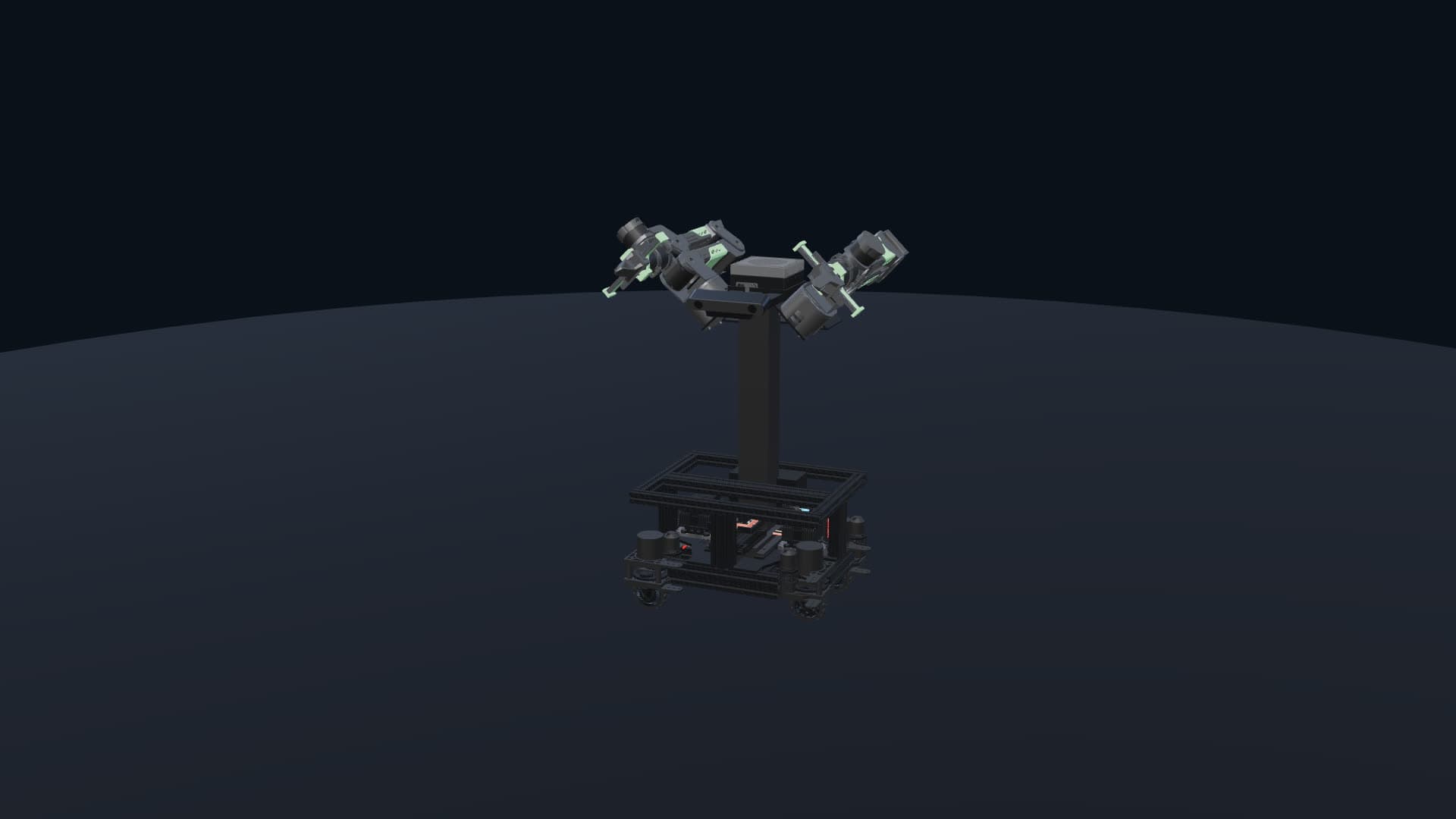
Dual-Arm Mobile AI Robot
The robot learns movements from human operation data and camera images, combining continuous dual-arm work and omnidirectional movement in one unit.
01 / Overview
AI learns the target movement from operator controls and camera images. The robot reproduces continuous two-arm work that is difficult to configure with conventional teaching, while four-wheel independent steering and drive let it approach equipment flexibly from any direction.
One arm supports the object while the other grasps and transfers it. Both arms work together through a continuous task.
Human controls and camera images become learning data, reducing the need to teach every fine movement one at a time.
Each of the four wheels is independently steered and driven, combining forward, sideways, and rotational movement to approach equipment flexibly.
02 / Applications
We assess the application around the object and equipment conditions. The following are example tasks.
Assess a sequence that grasps, transports, and places objects at designated positions.
Assess inspection processes that include grasping and transferring objects.
Assess tasks where both arms coordinate to support, grasp, and place parts.
Approach equipment and assess tasks that grasp objects for loading and unloading.
03 / Approach
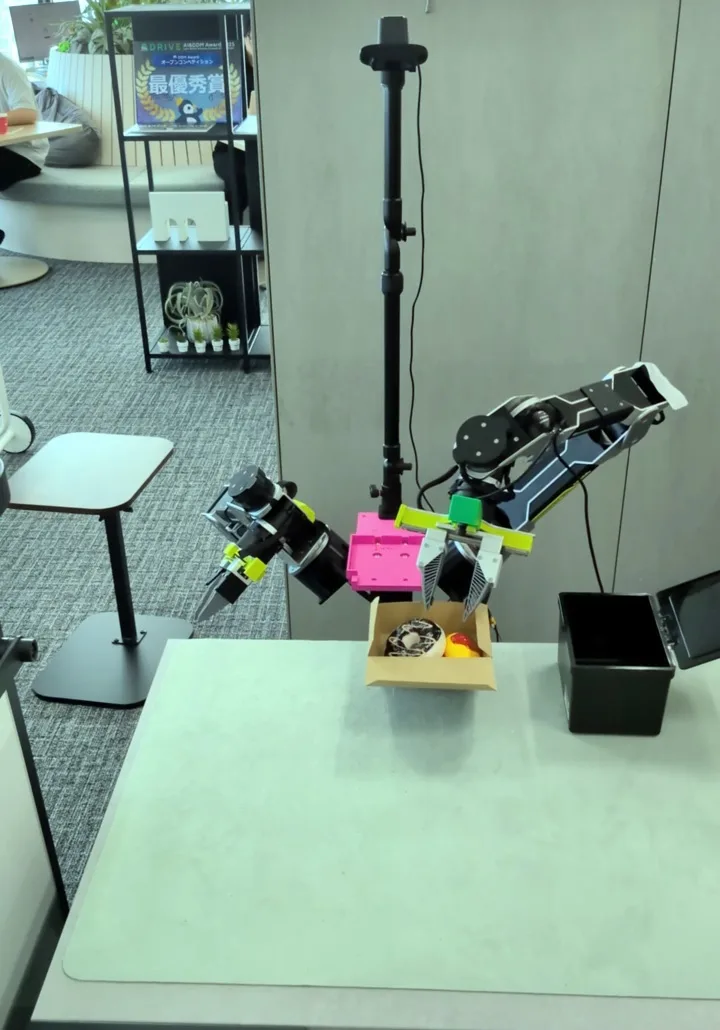 Actual robot
Use both arms to grasp the object in preparation for the next movement.
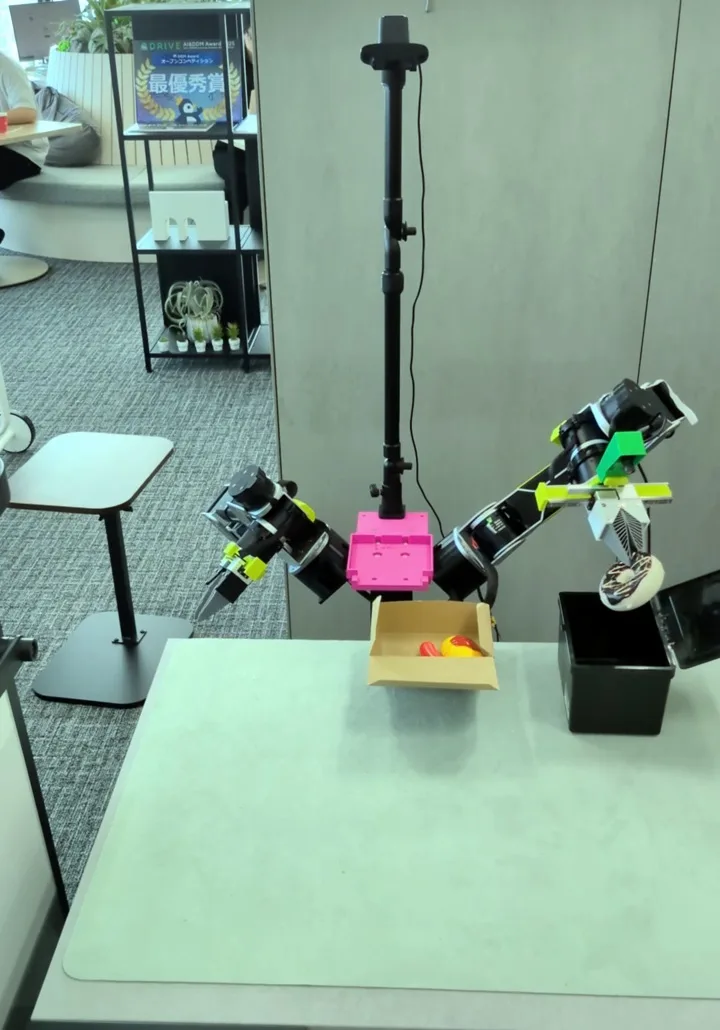 Actual robot
Move the grasped object while coordinating both arms.
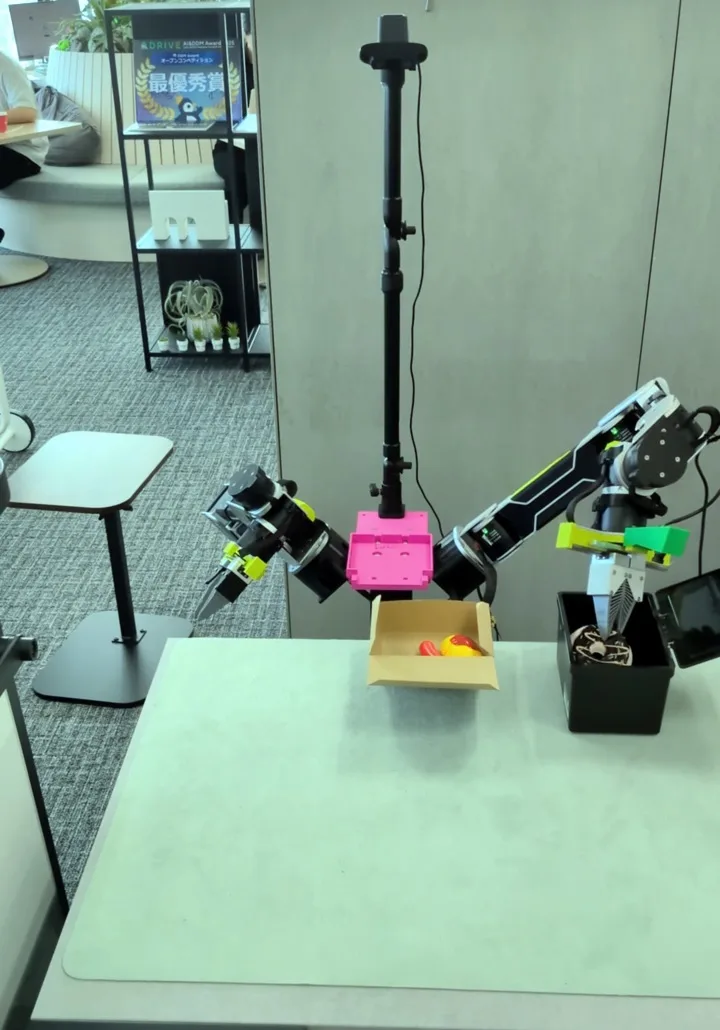 Actual robot
Place the transported object at the position defined for the task.
Arm specifications are per arm. Other specifications are finalized for each deployment and may change with deployment conditions.
Interactive 3D model
Drag to rotate the robot04 / Process
Record operator controls and camera images, then move from learning the target task to reproducing it on site.
Record operation data and camera images.
Learn the movements of the target task.
Reproduce the learned movements on site.
05 / FAQ
Example tasks include packing, sorting, inspection, assembly assistance, and machine loading and unloading. We assess the application after reviewing the object and equipment conditions.
Human controls and camera images are used as learning data. This reduces the need to configure every fine movement one at a time with conventional teaching.
Dimensions, total weight, speed, operating time, safety configuration, and power specifications are finalized for each deployment. Published specifications may also change with deployment conditions.
Dual-Arm Mobile AI Robot