
FACTORY PARTS SUPPLY
Automating factory parts supply with robots.
Recognize and grasp unfamiliar parts without additional training.
Factories still rely heavily on manual work to pick the required quantities of a wide variety of parts from shelves and transport them to production lines.
Parts vary in shape, weight, and placement, making this a process that conventional robots struggle to handle flexibly.
We are developing pick-and-place technology to recognize and grasp unfamiliar parts without additional training and pick the specified quantities and move them where needed.
We aim to put this technology into practical use for parts supply within factories first, then expand to a range of industries.
Toward handling unfamiliar parts without additional training
We are developing technology to recognize and grasp parts, collect the required quantities, and prepare them for transport.
Recognize and grasp unfamiliar parts
We are working on technology to recognize parts of different shapes and placements and pick them from shelves without additional training for each part.
Pick the specified quantities
Our pick-and-place development goes beyond a single grasp to collecting the required types and quantities of parts.
Connect picking with placement
We aim to automate parts supply to production lines by connecting shelf picking with moving parts to the required location.
Starting with factory parts supply, then expanding to other industries
Our first goal is practical use for picking parts from shelves and moving them where needed within factories. We aim to build on that technology to serve a range of industries.
Sim2Real
Try it in simulation. Check it on site.
We validate motions in simulation, from recognizing and grasping parts to picking and placing them. This work supports our goal of practical use for parts supply within factories.
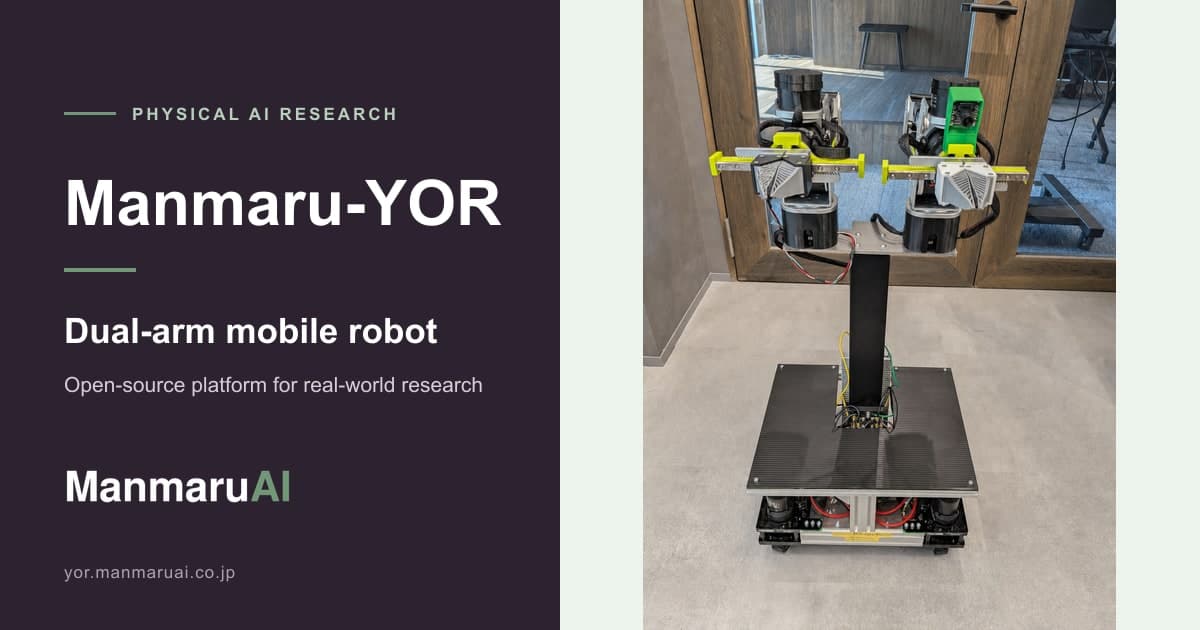
Our standard robot, Manmaru YOR, is a dual-arm omnidirectional mobile robot based on the open-source YOR design, with arms and frames redesigned by ManmaruAI. Assembled and tested in Japan, complete robots start at JPY 2,000,000. Prices vary by configuration.
- 01Rebuild the task in simulation
We model the workpiece, shelves or totes, and the robot to recreate the task in Sim.
- 02Train and validate in Sim
The motion is trained and its success rate and trial count are recorded in Sim.
- 03Transfer to the robot (Sim2Real)
The trained motion moves to the real robot, where we record its success rate and transfer days.
- 04Check and tune on site
We check the motion under site conditions and tune it before operation.
Process & Pricing
Deployment process and pricing
Workpiece fit check
From JPY 300,000We rebuild your workpiece and task in simulation and check through Sim2Real whether the robot can grasp and place it. Results are reported as success rate and trial count.
On-site PoC
Quoted from the fit-check resultsWe bring the robot to your site and validate the task with your equipment and layout, recording real-robot success rate and transfer days.
Production and multi-robot rollout
Quoted by fleet size and operating conditionsThe validated task goes into production and is extended to more lines and sites.
Standard robot pricing
- Arm only:From JPY 260,000
- Complete robot (dual-arm, omnidirectional base):From JPY 2,000,000
Prices vary by configuration. Additional sensors and cameras, hand changes, and computer upgrades are charged separately.

Program selections and partnership
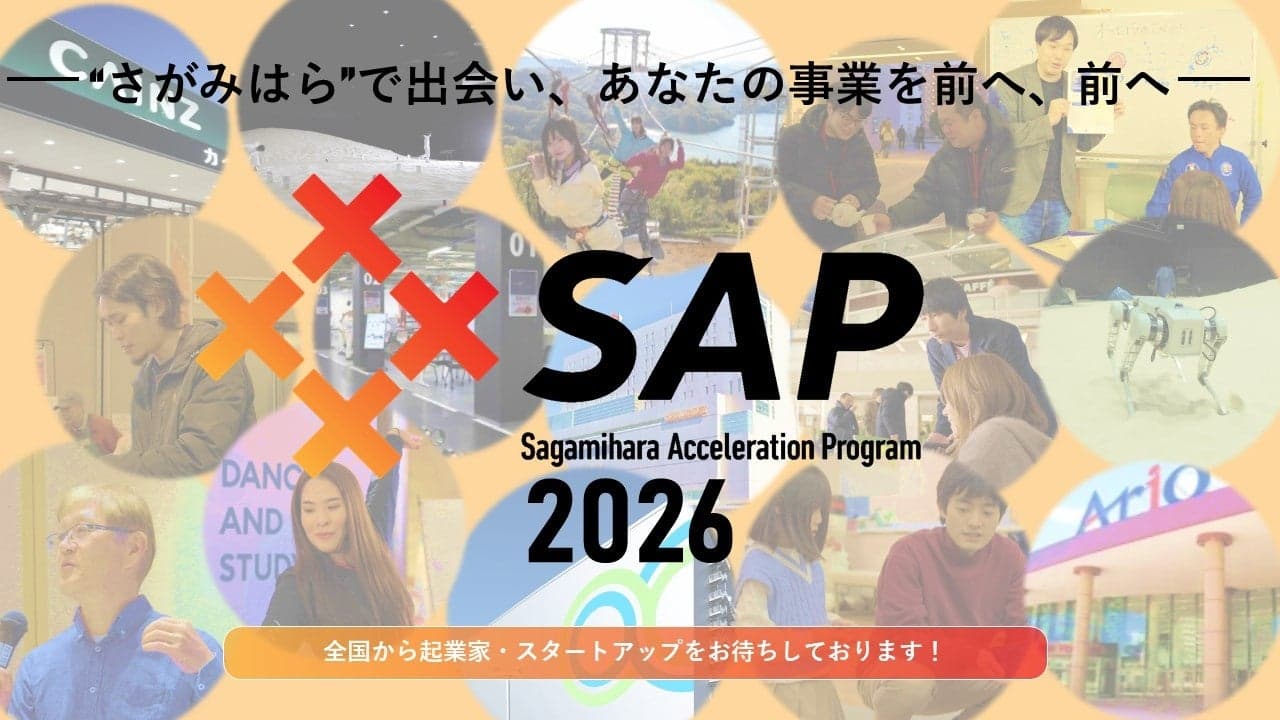
Selected for accelerator programs in Kawasaki, Sagamihara, and Sumida. Explore the program announcements and our partnership.

Partnership
OpenAI Select Partner
ManmaruAI has been named an OpenAI Select Partner. As part of the OpenAI Partner Network, we work with OpenAI to help organizations build, deploy, and scale AI solutions responsibly.
Read the announcement →Insights
PhysicalAI Lab
We publish Sim2Real experiment logs and control and learning research on note.


Discuss deployment and a fit check
Tell us about your objects, tasks, and site conditions. A fit check from JPY 300,000 recreates the task in simulation to assess whether it can be automated.